
Best Motorcycle Roads in California
California is one of the few places in the country where you can ride coastal sweepers in the morning and high-alpine switchbacks in the afternoon — sometimes on the same day. The state's sheer geographic range means the roads on this list have almost nothing in common except quality: a redwood-tunneled highway in the north Coast Range, a sun-baked mountain crest above Los Angeles, a Sierra Nevada pass with grades that demand your full attention, and a cliff-hugging coastal corridor that lives up to every photograph you've seen of it. California also has the largest registered motorcycle population in the country, which cuts both ways — the routes are well-supported and well-known, but popular ones attract traffic on weekends, and urban corridors leading to the best rides can be slow going. Plan your start times accordingly, know your fuel range before you leave, and verify pass conditions before heading into the mountains.
- Routes
- 4
- Best season
- Year-round (varies by region)
- Helmet law
- Required — all riders, all ages
- Lane splitting
- Legal (CVC §21658.1)
- Sonora Pass season
- Mid-May through November
The routes
scenic road · california
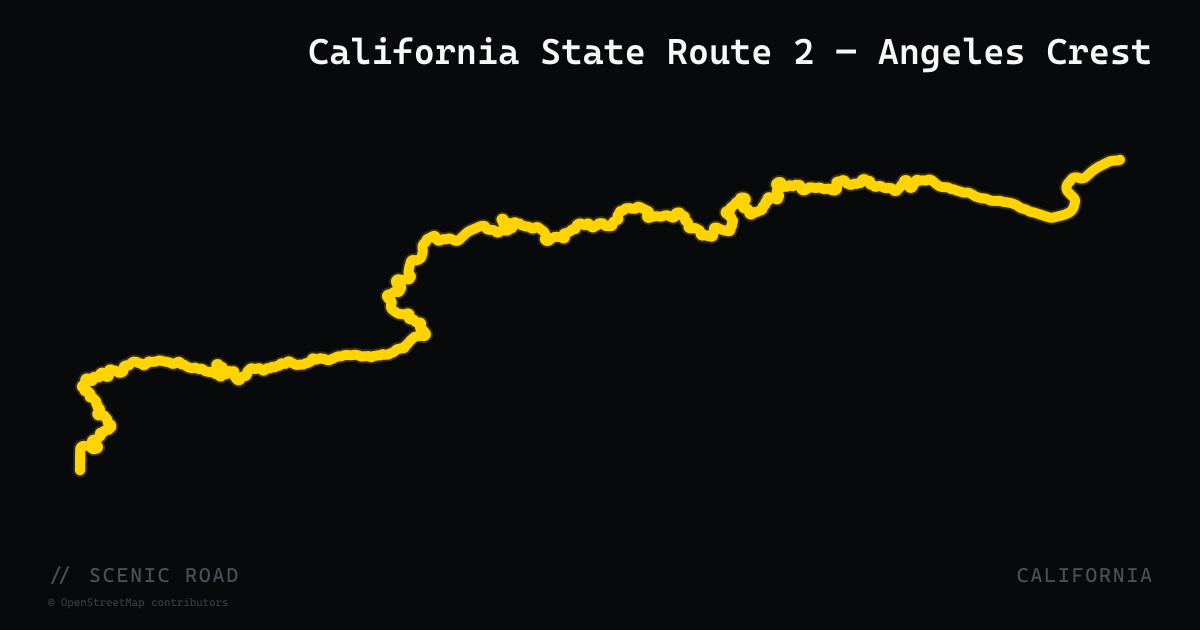
Angeles Crest Highway
SR-2 from La Cañada to Wrightwood — a top California motorcyclist favorite.
scenic road · california
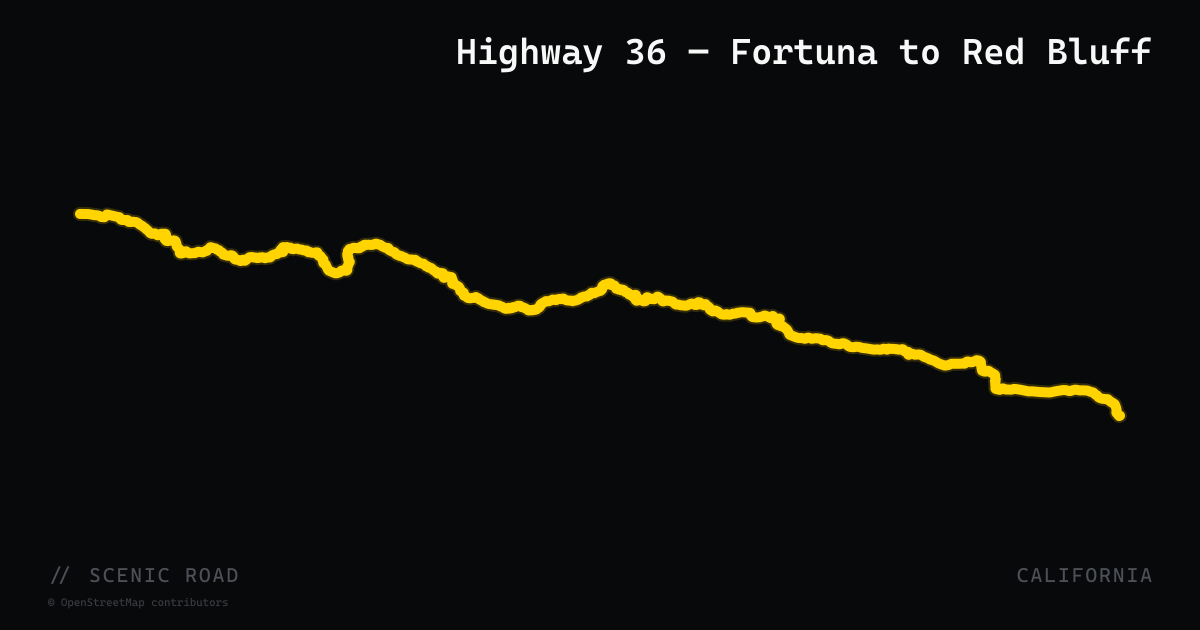
Highway 36 — Fortuna to Red Bluff
California Highway 36 winds approximately 140 miles through coastal redwoods and the Coast Range, crossing Morgan Summit before descending to the Sacramento Valley at Red Bluff.
scenic road · california
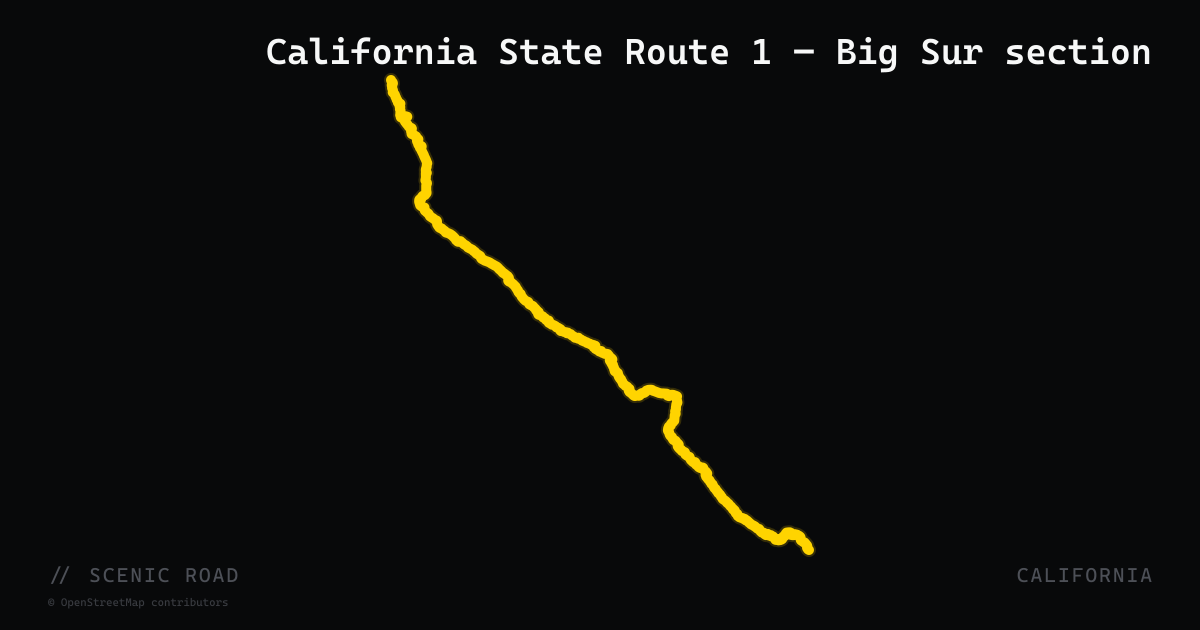
Pacific Coast Highway (Big Sur)
California's Highway 1 hugging the Big Sur coastline — sheer cliff drop-offs, the Bixby Bridge, redwood canyons, and the most photographed stretch of road in California.
scenic road · california
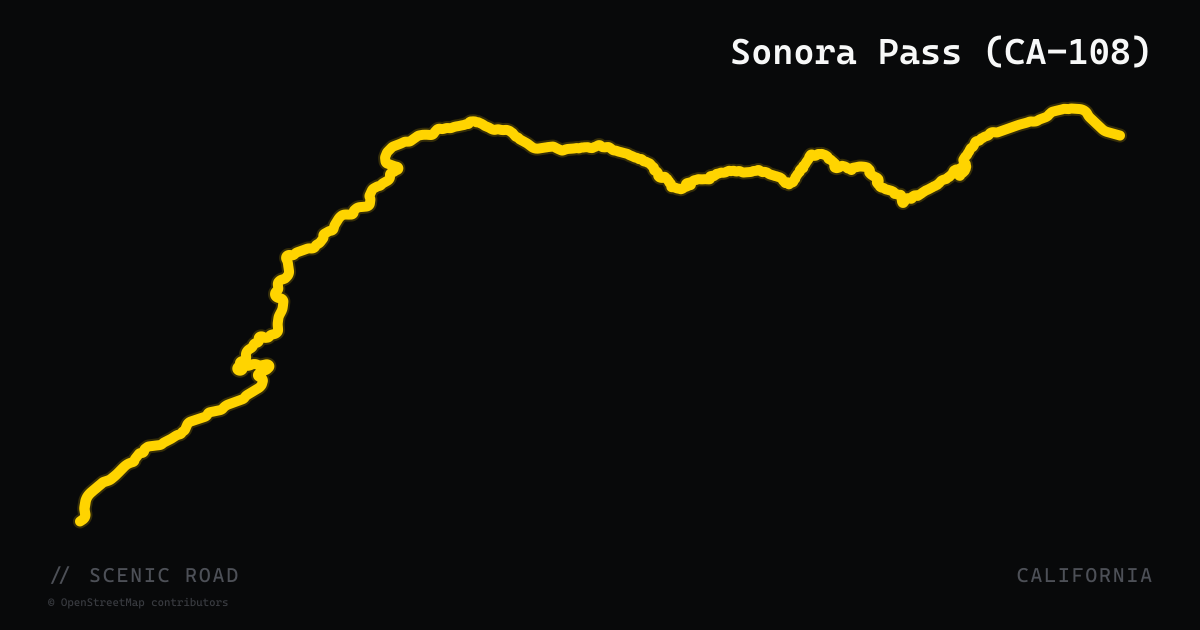
Sonora Pass (CA-108)
CA-108 crosses the Sierra Nevada over Sonora Pass, linking the Central Valley foothills to the Eastern Sierra via steep grades and high-elevation scenery, with the road typically closed in winter.
Why California Rewards a Thoughtful Rider
California's terrain changes faster than almost any other state. Within a few hours of riding you can move from sea-level ocean cliffs through redwood canyons, across high-desert foothills, and up into granite alpine country above 9,000 feet. That range is what puts the state on every serious rider's short list — but it also means no single set of gear, preparation, or skill emphasis covers every route here.
Matching the Road to Your Bike and Style
The routes on this page aren't interchangeable. Touring bikes and baggers do well on Pacific Coast Highway's Big Sur corridor and on Highway 36 — both reward a steady, smooth approach and have enough length to justify the luggage. Sonora Pass on CA-108 suits a more capable chassis: grades approaching 26% and tight switchbacks ask for confident low-speed handling. Sport-oriented bikes will find Angeles Crest Highway's technical, high-elevation pavement closer to home turf. Adventure riders eyeing dirt should look at the California BDR routes rather than the paved roads listed here — the CABDR-South is designed for mid-October through mid-April riding in the Mojave and is widely considered the most demanding BDR in the country.
Planning Around Passes and Closures
The one hard logistics constraint in California is the Sierra Nevada in winter. Sonora Pass closes when snow accumulates — typically sometime between late November and early January depending on the year — and does not reopen until Caltrans finishes snow removal, usually in mid-May. Check Caltrans QuickMap before any mountain ride in spring or fall. Even after a pass opens, sand and gravel in the curves are common for the first few weeks.
Angeles Crest Highway can be temporarily closed by fire, rockfall, or winter storms at any time of year, so a quick condition check before leaving the greater Los Angeles area is always worthwhile.
Real Hazards to Know Before You Go
- Wildlife: Highway 36 and the Coast Range roads see heavy deer activity at dawn and dusk.
- Coastal fog: On PCH, fog can roll in within minutes and reduce both visibility and road grip. Layer for warmth even in summer.
- Weekend traffic: Popular stops on Angeles Crest attract gatherings of varied experience levels. Ride your own ride.
- Fuel and cell: Highway 36's 140 miles between Fortuna and Red Bluff have limited services and unreliable cell coverage. Highway 33 through Los Padres NF is similar. Top off before entering either.
- Early-season debris: Freshly opened mountain passes carry residual sand, gravel, and storm damage. Give yourself extra margin in curves until the road has been swept and traveled in.
Helmet and Lane Splitting Laws
California requires a DOT-compliant helmet for all riders and passengers with no age exemptions. The state is also the only one in the country where lane splitting — riding between lanes of stopped or slow-moving traffic — is explicitly legal under CVC §21658.1. CHP guidelines recommend staying within 10 mph of surrounding traffic when splitting; the practice carries real risk and is best left to experienced riders in familiar conditions.
Frequently asked
Do I have to wear a helmet in California?+
Yes. California has a universal helmet law under Vehicle Code Section 27803. All riders and passengers must wear a DOT-compliant helmet at all times, regardless of age or experience. There are no partial-age exemptions. Riding without one can result in a fine and is a factor in any personal injury claim.
Is lane splitting legal in California?+
Yes. California is the only U.S. state that explicitly allows lane splitting under CVC Section 21658.1. The California Highway Patrol recommends not exceeding traffic speed by more than 10 mph when splitting, and avoiding the practice in heavy free-flowing traffic. It requires good situational awareness and is not recommended for new riders.
When does Sonora Pass (CA-108) open and close?+
Sonora Pass typically closes with the first significant snowfall of winter — often in November or December — and reopens in mid-May after Caltrans completes snow removal operations. Exact dates vary by year and snowpack. Always check current conditions at Caltrans QuickMap (quickmap.dot.ca.gov) before riding the pass in spring or late fall, as even after opening, late-season storms can cause temporary closures and sand or gravel in curves is common early in the season.
Which California routes have limited fuel or no cell service?+
Highway 36 between Fortuna and Red Bluff is the most demanding for logistics — about 140 miles with minimal services and no reliable cell coverage. Fill up at either end before you go. Highway 33 through Los Padres National Forest also has a long stretch with no fuel stops. On Sonora Pass and Angeles Crest Highway, plan fuel stops at the ends of the route rather than relying on finding a station mid-road.
What are the main hazards on California mountain roads?+
Sand and gravel swept into curves after winter is a real issue on Sonora Pass and Angeles Crest, especially early in the season. Coastal fog on PCH can appear without warning even on sunny days and drops visibility and grip quickly. Wildlife — deer in particular — is active at dawn and dusk on Highway 36 and the Coast Range roads. On Angeles Crest, weekend traffic from less experienced riders is a genuine hazard on the tighter sections. Always ride within the sight distance of your lane.
Can I ride Big Sur's Pacific Coast Highway year-round?+
Generally yes. The Regent's Slide closure that blocked through-traffic for an extended period was resolved with the 2026 reopening, restoring the full Carmel-to-San Simeon corridor. That said, storm debris, rockfall, and Caltrans maintenance work can create temporary closures at any time, particularly in winter. Check Caltrans QuickMap before any PCH trip in the rainy season.
When to ride
California supports riding somewhere in the state in every month of the year. Southern California's coastal and foothill routes — including Angeles Crest — are accessible most of the year, though winter rain and occasional snow can close higher elevations temporarily. The Sierra Nevada high passes are a different story: Sonora Pass on CA-108 typically closes with the first heavy snowfall, often in November or December, and reopens in mid-May after Caltrans crews clear snow that can exceed ten feet in depth — the goal is always to have the pass open before Memorial Day. For Highway 36 and Northern California's Coast Range, late spring through October offers the most reliable dry-weather window, while PCH's Big Sur stretch is largely a year-round ride now that the Regent's Slide reopening in 2026 restored full access.
+Sources & references (10)
- California Motorcycle Helmet Laws 2024 – Kreeger Law
- California Helmet Laws – Chain | Cohn | Clark
- CVC §27803 – California Legislative Information
- Sonora Pass Traffic Advisory 05/13/25 | Caltrans
- Caltrans Announces Sonora Pass on State Route 108 to Reopen – Gold Rush Cam
- Sonora Pass Current Conditions – SonoraPassVacations.com
- California Motorcyclist Safety – California Highway Patrol
- Is Lane Splitting Legal in California? – LA Century Law
- Best States to Ride a Motorcycle Year-Round – Riders Share
- Best Motorcycle Rides in California 2026 – GreatMotorcycleRoads.com