
Best Motorcycle Roads in Idaho
Idaho is a state that rewards riders who plan ahead. It offers more variety per square mile than almost anywhere in the West — paved river corridors so smooth you can hold a sweeping line for a hundred miles, high mountain passes that close under snow for half the year, remote byways where the next fuel stop is sixty miles out, and a full-length backcountry discovery route that runs dirt from Nevada to Canada. The crowds that fill Glacier or the Oregon coast mostly skip Idaho, which means you get that variety with fewer trucks in the mirrors. The trade-off is real logistics: cell service disappears for long stretches, elevation swings bring sudden afternoon storms, and fire season can reroute or shut down your plans from July onward. Come prepared, and Idaho returns the favor.
- Routes
- 1
- Best season
- May–October (route-dependent)
- Helmet law
- Required under 18 only
- Lane splitting
- Illegal
- Signature terrain
- River canyons, high passes, backcountry dirt
The routes
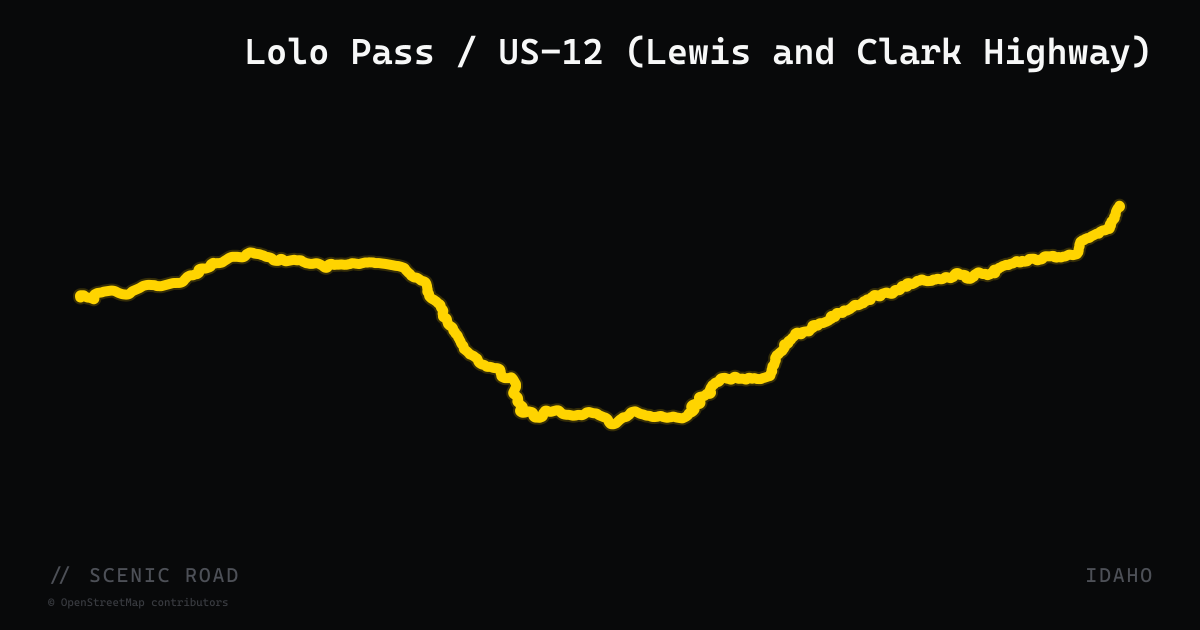
Why Idaho Rewards Riders Who Do Their Homework
Idaho's riding geography splits cleanly into two worlds: the paved scenic byway network threading river corridors and mountain passes across the center and north of the state, and the dirt-and-gravel backcountry that the Idaho BDR stitches together from the Nevada border all the way to Canada. Most riders will spend time in both, and knowing which routes belong to which world — and when each opens — is the practical starting point for any Idaho trip.
Choosing Between Paved and Dirt
The paved routes here tend toward sweeping, sustained curves rather than tight switchbacks. US-12 along the Lochsa River is the clearest example: nearly 100 miles signed "Winding Road" without a stoplight, river always in frame, pavement in good shape. ID-75 over Galena Summit and ID-21 over Banner Summit add genuine elevation — Galena tops out at 8,701 feet — along with the weather unpredictability that altitude brings. None of these are technically intimidating for an experienced rider, but all of them demand attention to logistics.
The Idaho BDR is a different conversation entirely. It is a seven-to-ten-day commitment on a capable dual-sport or adventure bike, crossing remote terrain where help is genuinely far away. Fire season (typically late July onward) can close sections without much notice — check the Idaho Fire Map before committing to any backcountry day.
Logistics Worth Getting Right
- Fuel: The Lochsa corridor has one fuel stop across 99 miles (Lochsa Lodge). BDR sections can run 60–80 miles between services. Know your tank range.
- Cell service: Expect none on US-12 between Kooskia and Lolo Pass, on large stretches of ID-21, and across most BDR sections. File a float plan with someone.
- Weather: Mountain zones — especially Galena Summit and Banner Summit — can see rapid temperature drops and afternoon thunderstorms even in July. Rain gear is not optional.
- Wildlife: Deer and elk crossings are common on ID-75 between Stanley and Challis, particularly at dawn and dusk. Reduce speed accordingly.
Regional Timing at a Glance
| Route | Typical Window |
|---|---|
| US-12 / Lochsa Corridor | May–October |
| Sawtooth Scenic Byway (ID-75) | Late May–October |
| Ponderosa Pine Scenic Byway (ID-21) | Mid-May–mid-October |
| Mesa Falls Scenic Byway (ID-47) | Late May–October |
| Idaho BDR | July–October |
Autumn is often the most comfortable window across the board — lower fire risk than August, stable weather, and lighter traffic than the summer peak.
Frequently asked
Do I need to wear a helmet to ride a motorcycle in Idaho?+
Idaho requires helmets only for riders under 18. Per Idaho Code § 49-666, adult riders (18 and older) are not legally required to wear one on public roads, though safety experts and the Idaho Transportation Department strongly recommend helmet use for all riders regardless of age. Even if you're legally exempt, consider that not wearing a helmet can complicate personal injury claims if you're involved in a crash.
Is lane splitting legal in Idaho?+
No. Lane splitting and lane filtering are both illegal in Idaho. The Idaho Transportation Department explicitly states that both practices are off-limits, and violations can result in reckless or negligent driving charges.
When is the best time of year to ride in Idaho?+
Late spring through early fall — roughly May through October — is the primary riding window for most paved routes. Lower-elevation roads like US-12 along the Lochsa River are typically clear by May. High passes like Galena Summit and Banner Summit on ID-21 can carry snow well into spring and again in fall. The Idaho BDR is best tackled July through October, when high-country tracks have dried out enough for two-wheel travel.
Are there long fuel gaps on Idaho motorcycle routes?+
Yes, and this is one of the most important logistics points in the state. On US-12 through the Lochsa River corridor, Lochsa Lodge is the only fuel stop along a 99-mile stretch. On the Idaho BDR and remote byways, gaps between fuel can exceed 60–80 miles on dirt. Check fuel availability before each day's ride and carry a reserve if your tank range is modest.
What are the main hazards to know about riding in Idaho?+
Several hazards deserve attention: (1) Fire season — rural Idaho is heavily impacted by wildfires from mid-summer onward, and roads can close with little warning; check the Idaho Fire Map before any backcountry ride. (2) Wildlife — deer, elk, and other animals cross roads at dawn and dusk, particularly on routes like ID-75 between Stanley and Challis. (3) Weather — mountain zones see rapid, severe temperature swings and afternoon storms even in summer; pack rain gear. (4) No cell service — large portions of US-12, ID-21, and the BDR have no coverage; plan accordingly and let someone know your itinerary.
What type of bike do I need for the Idaho BDR?+
The Idaho BDR's 1,250 miles span eight sections mixing gravel forest roads, double-track, and some genuinely technical terrain. A dual-sport or adventure bike with reasonable ground clearance is the standard recommendation. Sections like the Magruder Corridor and Lolo Motorway are remote enough that mechanical self-sufficiency matters as much as bike choice. Street-only bikes are not appropriate for the route.
When to ride
Most paved routes in Idaho are rideable from late spring through fall, with summer and early autumn offering the most reliable conditions. High-elevation passes like Galena Summit (8,701 ft) on ID-75 are technically open year-round but subject to closure during heavy snow events in winter and early spring. The Idaho BDR and backcountry routes are generally best from July through October, when snow and mud have cleared sufficiently from the high country.
+Sources & references (9)
- Idaho Code § 49-666 – Motorcycle Safety Helmet Requirements
- Comprehensive Guide to Motorcycle Helmet Laws in Idaho – Sargent Law Firm
- Motorcycle Laws in Idaho – Andrew Injury Law
- Look Twice for Motorcycles as Riding Season Begins – Idaho Transportation Department
- Idaho Adventure Motorcycle Tour – Rocky Mountain ATV/MC
- Galena Summit – Wikipedia
- Galena Summit Slide, Idaho Highway 75 – Idaho Transportation Department Projects
- Top 7 Best Motorcycle Rides in Idaho – GreatMotorcycleRoads.com
- Motorcycle Riding – Southwest Idaho Travel Association