
Best Motorcycle Roads in Montana
Montana gives riders more vertical relief, more sky, and more solitude per mile than almost anywhere in the lower 48. The state's signature roads climb to elevations where summer snow lingers into July, cross continental divides on narrow ledges cut into cliff faces, and drop into river valleys flanked by peaks that haven't been named yet. The trade-off is a compressed season — the high routes that make Montana worth the trip are snow-gated from late fall through late spring — and a mix of RV traffic, wildlife crossings, and sudden afternoon storms that demand consistent attention. Ride here with good gear and a flexible itinerary, and Montana will deliver the kind of riding that doesn't need superlatives.
- Routes
- 3
- Best season
- Late May – mid-October
- Helmet law
- Required under 18 only
- Lane filtering
- Legal (≤20 mph, since 2021)
- Signature terrain
- Alpine passes, high tundra
The routes
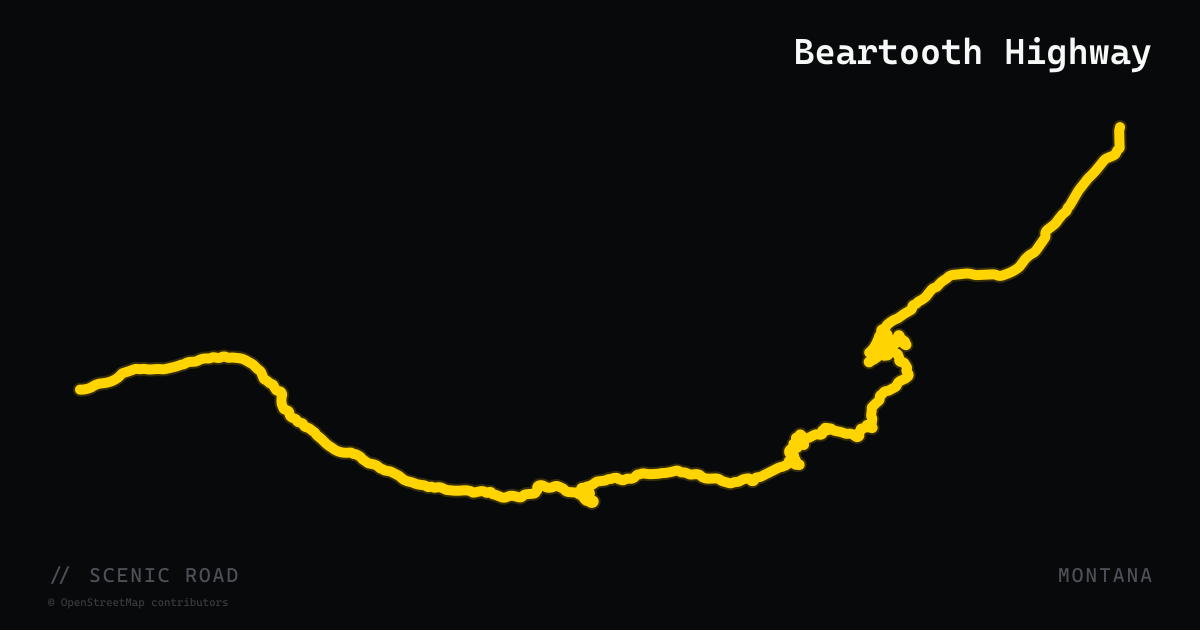
scenic road · montana
Beartooth Highway
68 miles of US-212 climbing to 10,947 ft over Beartooth Pass — switchbacks, alpine tundra, and the high road into Yellowstone's northeast gate.
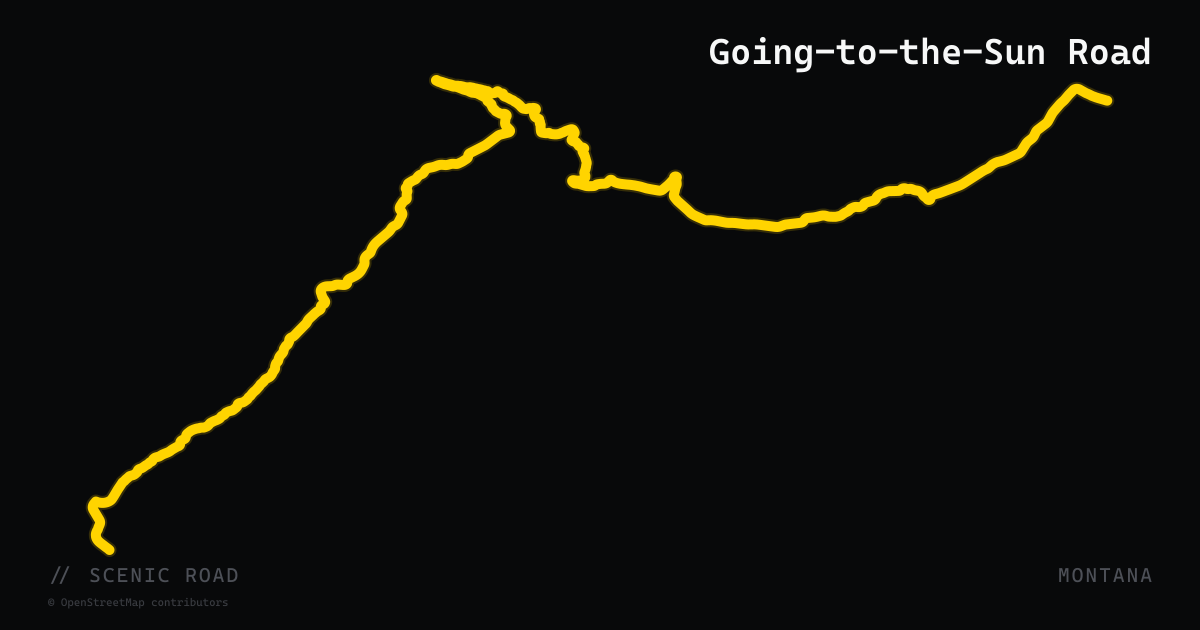
scenic road · montana
Going-to-the-Sun Road
50 miles bisecting Glacier National Park east-to-west across the Continental Divide at Logan Pass — hanging cliffs, alpine meadows, and the most engineered scenic drive in the NPS.
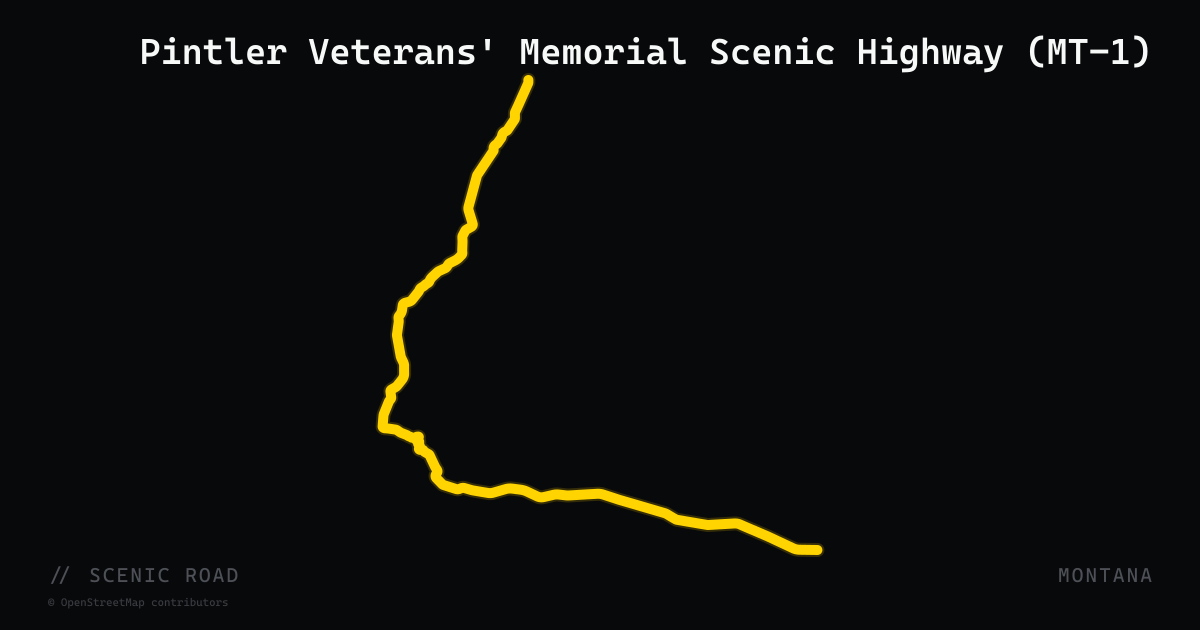
scenic road · montana
Pintler Veterans' Memorial Scenic Highway (MT-1)
A 64-mile Montana highway connecting Drummond to Anaconda through the Anaconda-Pintler Range, passing Georgetown Lake, Philipsburg, and the ghost town of Granite.
Why Montana Riding Is Different
Most states offer a riding season measured in months. Montana's best roads operate on a narrower clock set by snowpack, not the calendar. The high routes close hard in autumn and reopen on the snowplow's schedule, not yours. That compression is actually part of the appeal — when the passes are open, they're genuinely open, and the urgency of a short window focuses a trip in a useful way.
The state divides roughly into three riding zones. The southwest — anchored by the Anaconda-Pintler Range — offers lower-elevation routes through mining-era towns and past mountain lakes with a longer usable season and less tourist traffic. The south-central corridor follows river valleys toward Yellowstone's northern approaches, where the Beartooth rises sharply above Red Lodge into an alpine world above treeline. The northwest is Glacier country, where the Going-to-the-Sun Road cuts across the Continental Divide in a way that no other paved road in the country replicates.
Choosing the Right Route
If your priority is a classic high-alpine pass experience and you're riding in late May or early June, check Beartooth Highway conditions first — it opens earlier than Going-to-the-Sun Road, which rarely achieves a full crossing before mid-June. If you're planning a July or August trip and want both in one loop, they can be combined into a multi-day circuit through Billings, Red Lodge, Cooke City, and Whitefish.
For riders on adventure bikes seeking something off the main tourist corridors, the Montana BDR — released in early 2026 — covers roughly 900 miles of dirt and gravel across the state's interior mountain ranges, best ridden between July and September.
Practical Logistics
- Fuel planning matters. Gas is scarce between Cooke City and the Beartooth plateau, and nonexistent inside Glacier National Park.
- Morning timing helps on Going-to-the-Sun Road — Logan Pass parking fills early and is capped at 3 hours in 2026.
- Weather changes fast above 8,000 feet. Pack a rain layer regardless of the forecast, and be prepared to wait out hail at a pullout rather than push through it.
- Wildlife crossings are common at dawn and dusk on all three routes. Treat every shaded curve as a potential animal encounter.
- Cell service is limited or absent on most mountain segments. Download offline maps before you leave pavement.
Adults are not legally required to wear a helmet in Montana, but the remoteness of these roads makes full gear a practical choice, not just a safety one.
Frequently asked
Is a helmet required to ride a motorcycle in Montana?+
Montana requires helmets only for riders and passengers under 18. Adults 18 and older are not legally required to wear one, though experienced riders strongly recommend helmet use regardless of age on Montana's remote roads where emergency services can be far away.
When does the Beartooth Highway open and close each year?+
The Beartooth Highway (US-212) typically opens around the Friday of Memorial Day weekend and closes in early-to-mid October — often between October 3 and October 15, depending on autumn weather. The Montana DOT and NPS coordinate plowing, but unexpected storms can cause temporary closures throughout summer. Always check the MDT 511 app before riding.
When does Going-to-the-Sun Road open, and do I need a reservation in 2026?+
The alpine section of Going-to-the-Sun Road typically opens to vehicles in mid-June, with the average full opening around June 11 historically. For 2026, Glacier National Park has discontinued the vehicle reservation requirement park-wide. However, Logan Pass parking is limited to 3 hours starting July 1, 2026, and congestion can still trigger temporary entry delays. You still need a standard park entrance pass.
Is lane filtering or lane splitting legal in Montana?+
Yes — Montana legalized lane filtering in 2021 (Senate Bill 9, effective October 1, 2021). Riders may filter past stopped or slow traffic when the motorcycle is traveling at 20 mph or less, the traffic being passed is moving at 10 mph or less, the lane is wide enough to pass safely, and conditions permit prudent operation.
What are the biggest hazards on Montana mountain roads?+
The main hazards are wildlife on the road (deer, elk, and bear crossings are common at dawn and dusk), sudden high-alpine weather changes including hail and snow even in summer, gravel and loose debris on mountain switchbacks, and heavy RV and tourist traffic on the Beartooth and Going-to-the-Sun corridors during peak season. Cell service is limited or absent on most routes.
What is the Montana BDR and when can I ride it?+
The Montana Backcountry Discovery Route (MTBDR), released in February 2026, is an approximately 900-mile dual-sport/adventure route running from Island Park, Idaho to the Canadian border near Eureka. It crosses more than 13 mountain ranges including the Gravelly, Pioneer, and Cabinet Mountains. The recommended riding season is July through September.
When to ride
Montana's primary riding window runs from late May through mid-October, though the high-alpine routes set the real constraints. The Beartooth Highway typically opens around Memorial Day weekend and closes in early-to-mid October depending on snowfall, while Going-to-the-Sun Road in Glacier National Park generally opens to full vehicle traffic in mid-June and closes around mid-October. July and August offer the most reliable access across all routes, with the best stable weather and fully open passes.
+Sources & references (9)
- Beartooth Highway | Montana Department of Transportation (MDT)
- When Does Beartooth Highway Open? Complete Timing Guide — The Yodeler Motel
- Going-to-the-Sun Road Open for the 2025 Season — NPS Glacier National Park
- Going-to-the-Sun Road Tickets 2026 (No Vehicle Reservations) — River Haus Glacier
- Big Drift, Buried Bathrooms, and Rockfall: The Real Story of Plowing Going-to-the-Sun Road in 2026 — Snowbrains
- Montana Motorcycle Laws — Law Tigers
- Montana Motorcycle Helmet Laws — motorcyclehelmetlawsbystate.com
- A closer look at Montana's new lane-filtering law — RevZilla Common Tread
- Lane Splitting Laws by State 2025 — Riders Share