
Best Motorcycle Roads in Texas
Texas is too big and too varied to fit a single riding narrative. The Hill Country delivers dense limestone curves and canyon drops within a few hours of San Antonio or Austin. West Texas offers the opposite: long, exposed desert highways interrupted by mountain passes and river canyons where you can ride for an hour without seeing another vehicle. The routes here span both worlds — from the famous Three Twisted Sisters loop to the remote River Road along the Rio Grande — and each demands a different kind of preparation. What unites them is pavement quality, genuine scenery, and the kind of solitude that gets harder to find.
- Routes
- 1
- Best season
- Oct–Apr (spring & fall ideal)
- Helmet law
- Partial — required under 21
- Lane splitting
- Illegal
- Signature terrain
- Hill Country canyons & West Texas desert
The routes
Why Texas Rewards the Rider Who Plans Ahead
Texas doesn't have one riding identity — it has four or five. The limestone ridges of the Hill Country, the Chihuahuan Desert plateaus of West Texas, the Davis Mountains, and the Rio Grande canyon corridor each require different timing, gear, and expectations. The routes on this page cover the best of all of them, but a single trip can't do justice to the whole state. Better to pick a region, ride it well, and come back.
Choosing Between the Hill Country and West Texas
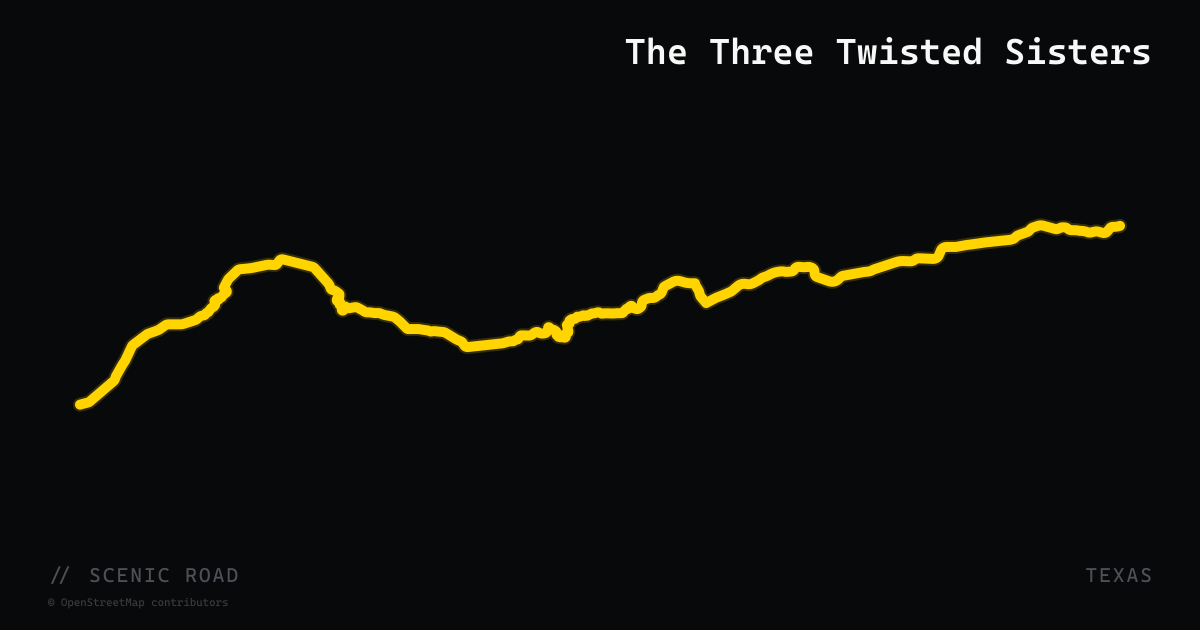
If you're based near San Antonio or Austin, the Hill Country routes are the obvious starting point. The Three Twisted Sisters loop is the state's most-discussed motorcycle road for good reason — the density of curves along RM 337 is genuinely unusual for Texas. The Devil's Backbone on RR 32 is a shorter, more accessible alternative that works well as a warmup or a day ride from either city. Both roads carry real traffic on spring and fall weekends; weekday visits are quieter.
West Texas is a different commitment. River Road (FM 170) and the Davis Mountains Scenic Loop sit 5–7 hours from San Antonio. The distances between services are real — not a suggestion to top off fuel, but a practical necessity. For the Texas BDR-X, plan around the October–April window specifically; summer heat along the Big Bend corridor is not a comfort issue, it's a safety one, and monsoon season adds flash flood risk from July through September.
Real Hazards Worth Knowing
- RM 337 corners: TxDOT data points to this as Texas's most fatal motorcycle road. The hairpins are posted at 15–20 mph for a reason — canyon walls and minimal guardrails leave no margin.
- Sparse fuel in West Texas: Gas stations on FM 170 and the BDR-X are 50–80 miles apart in places. Carry a plan, not a hope.
- Deer and livestock: Active on Hill Country roads at dawn and dusk year-round. Reduce pace in low light.
- Summer heat: Big Bend Ranch State Park temperatures can exceed 100°F by late morning. Riding through that zone in July or August without extra water and an early start is a medical risk.
- Flash floods: The Big Bend corridor can experience life-threatening flash flooding during summer storms, sometimes with little warning.
Logistics at a Glance
- Hill Country base towns: Leakey, Camp Wood, Medina, Vanderpool — all small; lodging books out on popular weekends.
- West Texas base towns: Fort Davis (Davis Mountains), Presidio or Terlingua (River Road).
- Cell service: Essentially absent on FM 170 through Big Bend Ranch State Park. Download offline maps before you leave pavement behind.
Frequently asked
Do I have to wear a helmet to ride a motorcycle in Texas?+
Texas has a partial helmet law. All riders under 21 must wear a helmet with no exceptions. Riders 21 and older may ride without one only if they have completed a state-approved motorcycle safety course AND carry at least $10,000 in medical insurance that covers motorcycle injuries. If you don't meet both conditions, a helmet is legally required. Regardless of the exemption, wearing a DOT-approved helmet is the safest choice on every ride.
Is lane splitting legal in Texas?+
No. Lane splitting — riding between lanes of moving or stopped traffic — is illegal in Texas. Riders must stay within a single lane.
When is the best time to ride the Twisted Sisters (RM 335/336/337)?+
Spring (March–April) and fall (October–November) are the sweet spots. Spring brings wildflowers and mild temperatures; fall offers cooler air and less traffic than peak summer weekends. Avoid mid-summer heat if possible, and always watch the forecast for afternoon thunderstorms from May through October.
Is River Road (FM 170) safe to ride in summer?+
Summer is the most challenging time for FM 170. Temperatures in the Big Bend area regularly exceed 100°F by mid-morning, and monsoon season (July–September) brings flash flood risk to the low-lying road corridor along the Rio Grande. October through April is the recommended window — cooler temperatures, less flood risk, and better overall conditions for a long day in the saddle.
How remote is River Road (FM 170)?+
Very remote. There is no cell service for most of the drive through Big Bend Ranch State Park. Services are extremely limited between Presidio and Study Butte/Terlingua — top off fuel and water at every opportunity. Carry a physical map or download offline navigation before you leave.
What are the biggest hazards on the Twisted Sisters?+
TxDOT data identifies RM 337 as Texas's most fatal motorcycle road, with the vast majority of crashes being single-vehicle incidents in corners. The hazards are specific: steep canyon descents, 15–20 mph posted hairpins, dramatic drop-offs with minimal guardrails, and sections where canyon walls block sightlines. Ride at a pace that leaves margin for loose gravel, deer, and oncoming vehicles crossing the centerline.
When to ride
The most comfortable riding window in Texas runs from October through April, when temperatures are moderate and humidity drops — October in particular is widely cited as the single best month. Summer is technically rideable but problematic: triple-digit heat is routine across the Hill Country and West Texas, and thunderstorms roll through from roughly May through October, with monsoon-driven flash floods a real hazard in the Big Bend corridor between July and September.
+Sources & references (8)
- Texas Motorcycle Helmet Law Guide — CPM Injury Law
- Texas Motorcycle Helmet Laws — The Wilhite Law Firm
- Texas Motorcycle Laws Every Rider Should Know — Law Tigers
- Best Scenic Motorcycle Rides in Texas — GothRider Magazine
- Discover the Best Motorcycle Roads in Texas — REVER
- Big Bend Ranch State Park — Texas Parks & Wildlife Department
- River Road FM 170: Scenic Drive Through Big Bend Texas — TexploreVibe
- When Does Motorcycle Season Start and End? A Regional Guide