
Best Motorcycle Roads in Utah
Utah stacks more distinct terrain into a single state than most riders will cover in a lifetime. A single trip can take you from Wingate sandstone river gorges near Moab to 10,000-foot aspen ridgelines, from slot-canyon pavement on the Colorado Plateau to the high Uintas along the Wyoming border. The roads here are real — narrow in places, exposed in others, and subject to sand, rock debris, and heat that demand attention. That variety is the point: no other state gives a motorcyclist this many genuinely different landscapes on paved roads within a few hours of each other.
- Routes
- 1
- Best riding months
- Apr–Jun, Sep–Oct
- Helmet law
- Required under age 21
- Lane splitting
- Not legal
- Signature terrain
- Red-rock canyons, high alpine passes
The routes
Why Utah Rides Differently Than Other Western States
Most western states have one or two signature terrain types. Utah has five or six stacked within a few hundred miles of each other. You can ride a red-rock river gorge in the morning, climb to a 10,000-foot aspen ridge by afternoon, and drop into slot-canyon pavement before dark — all on paved roads. That range shapes how you should plan here.
Choosing the Right Route for Your Bike
Not every Utah road suits every motorcycle. The routes on this page divide roughly into three categories:
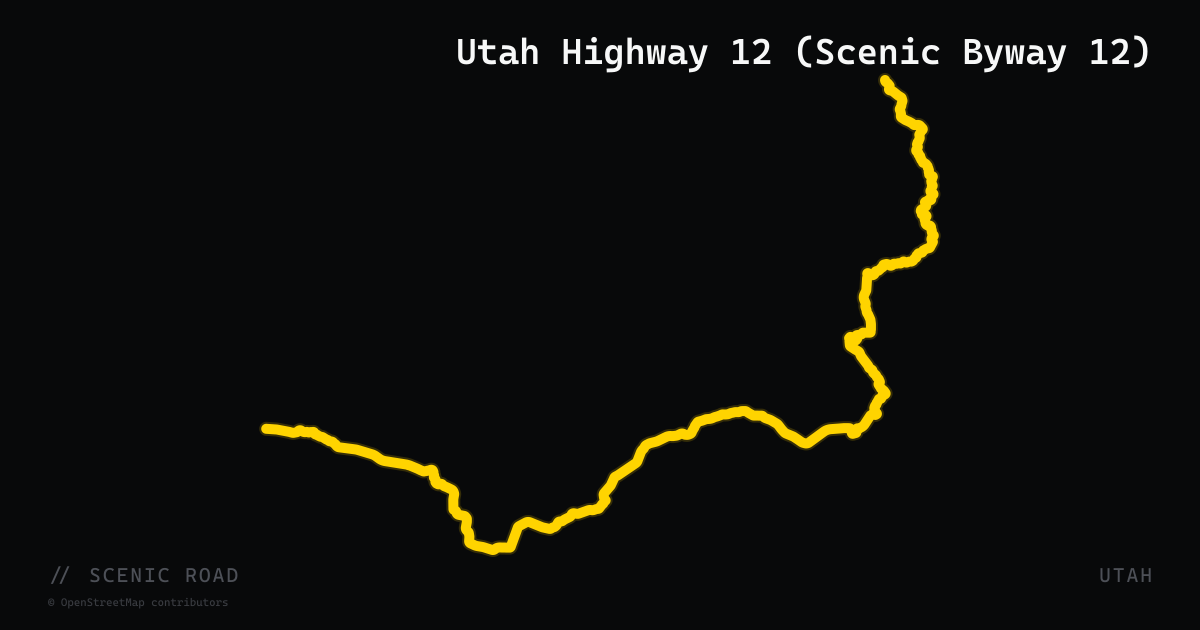
- Pavement-only scenic routes — Scenic Byway 12, Highway 128, the Zion–Mt. Carmel Highway, and the Mirror Lake Highway are all fully paved and accessible on any road bike, bagger, or touring rig.
- Pavement with a gravel option — The Burr Trail starts paved from Boulder for about 31 miles through Long Canyon and Singing Canyon. Road-bike riders get a full out-and-back on pavement; the gravel switchback section beyond is for dual-sports and adventure bikes only.
- Full adventure route — The Utah BDR is 871 miles of mixed surface from Mexican Hat to the Idaho border. It requires an off-road-capable machine, careful fuel planning (one gap exceeds 160 miles), and solid route-finding skills.
Seasonal and Elevation Logistics
Southern Utah's canyon roads — Highway 128, UT-9, and the lower sections of Byway 12 — are rideable most of the year, but mid-summer heat at lower elevations is a real factor, not just a comfort issue. Carry more water than you think you'll need.
High-elevation routes operate on a tighter window. The Mirror Lake Highway (UT-150) is a seasonal road closed by UDOT each winter due to snow and avalanche risk, typically reopening around Memorial Day weekend depending on snowpack. Always check UDOT's seasonal roads page before scheduling a Uintas ride in spring.
For the Utah BDR, late spring and fall are the practical windows — early enough to avoid summer thunderstorms on exposed ridges, late enough to avoid lingering snowpack at high elevation.
Hazards Worth Knowing
Sand drifted across pavement is the most common surprise in canyon country — it collects in shaded corners and after any wind event. The Hogsback section on Byway 12 runs along an exposed ridge with drop-offs on both sides and no guardrails; it's not technically difficult but demands focus. On UT-9 through Zion, the switchbacks and the 1.1-mile tunnel involve shuttle buses that occupy significant road width — give them room and expect stops. Fuel planning matters across the whole state: services are sparse in the canyon country between Escalante and Torrey, and critical on the BDR.
Frequently asked
Do I need a helmet to ride in Utah?+
Utah requires all riders and passengers under 21 to wear a DOT-approved helmet. Riders 21 and older may ride without one, though helmets are strongly recommended regardless of the law. Violations for those required to wear a helmet are treated as infractions and can result in fines.
When is Mirror Lake Highway (UT-150) open?+
Mirror Lake Highway is a seasonal road that closes each winter due to heavy snow and avalanche risk, typically in late November or December. UDOT generally reopens it around Memorial Day weekend, with the exact date varying by snowpack and weather. Always check the UDOT seasonal roads page before planning your trip.
Is lane splitting legal in Utah?+
No. Utah law prohibits motorcyclists from passing a moving vehicle in the same lane, and no more than two motorcycles may ride side-by-side in a single lane. Lane filtering (passing stopped traffic) is also not permitted.
What are the biggest riding hazards in Utah?+
Sand and fine gravel blown across pavement — especially on canyon roads — is a frequent and underappreciated hazard. Extreme heat in the low-desert corridors (Moab area, Colorado River canyon) demands extra hydration. On Scenic Byway 12, the Hogsback ridge section has no guardrails and sheer drop-offs on both sides. In Zion, the UT-9 tunnel approach involves steep switchbacks and large shuttle buses that take up significant road width. On the Utah BDR, fuel gaps can exceed 160 miles on certain sections.
What's the best region to start a Utah motorcycle trip?+
It depends on your bike and goals. Southern Utah — the corridor from Bryce Canyon through Escalante to Capitol Reef — is the most concentrated stretch of pavement-only scenic riding in the state and works well on any road bike. The Moab area anchors a great two- or three-day loop using Highway 128. Riders with dual-sport or adventure bikes can combine paved routes with the Utah BDR sections for a longer expedition.
Can I ride the Burr Trail on a bagger or touring bike?+
The first roughly 31 miles of the Burr Trail out of Boulder are paved and accessible to any road bike, passing through Long Canyon and Singing Canyon. Past the pavement end, the road turns to gravel and the terrain — including the dramatic switchbacks — is not suitable for heavy touring bikes. Riders on baggers or full tourers should plan to turn around where the pavement ends and retrace the canyon section back.
When to ride
The best months for motorcycle touring in Utah are April through June and September through October, when temperatures across the plateau and canyon country stay in a manageable range. Summer desert heat in Moab and similar low-elevation corridors can push well past 100°F, making July and August uncomfortable and potentially dangerous for long days in the saddle. High-elevation routes like the Mirror Lake Highway (UT-150) follow their own calendar: UDOT closes them in winter and typically reopens them around Memorial Day weekend, with exact timing depending on snowpack.
+Sources & references (9)
- Utah Motorcycle Helmet Law — Law Tigers
- Utah Helmet Laws: What You Need to Know — The Advocates
- Understanding the Utah Helmet Law — Palmer Litigation
- Best Motorcycle Rides in Utah — The Advocates
- 10 Motorcycle Routes to Explore in Utah — Winx Wheels
- UDOT Seasonal Roads Status — UDOT Traffic
- UDOT Announces All Seasonal Roads Now Open — Utah.gov
- Mirror Lake Highway Closes for Season — TownLift Park City
- Mirror Lake Scenic Byway — USDA Forest Service