
Best Motorcycle Roads in Washington
Washington puts more terrain variety within a single tank than almost any other state. The west side delivers sea-level rainforest, rocky Pacific shoreline, and glacier-fed lakes. Cross the Cascades and the air dries out, the trees thin, and the roads open into high-desert ranch country. Between those two worlds sit some of the highest paved passes in the lower 48, a 330-mile peninsula loop, a gravel-friendly backcountry route that stretches to the Canadian border, and a Mt. Rainier circuit that keeps you in the shadow of a volcano for most of the ride. The tradeoff is honest: pass roads close in winter, the west side stays damp well into spring, and wildfire smoke can shut down visibility east of the Cascades in late summer. Plan around those realities and Washington rewards almost any riding style.
- Routes
- 1
- Best season
- Late May–September
- Helmet law
- Required, all riders (DOT)
- Lane splitting
- Illegal
- Signature terrain
- Alpine passes, rainforest coast, ADV backcountry
The routes
Why Washington Rewards Planning
Washington's riding diversity is real, but so is its complexity. The state splits cleanly along the Cascade spine: west of the mountains you get maritime weather, old-growth forest, and the Olympic Peninsula's 330-mile coastal loop on Highway 101; east of the crest the climate turns drier, the scenery opens up, and passes like Washington Pass on SR-20 and Chinook Pass on SR-410 put you at altitude with long sight lines. Choosing where to ride first depends on your bike, your timing, and how much pavement you need under you.
Seasonal Timing Matters Here More Than Most States
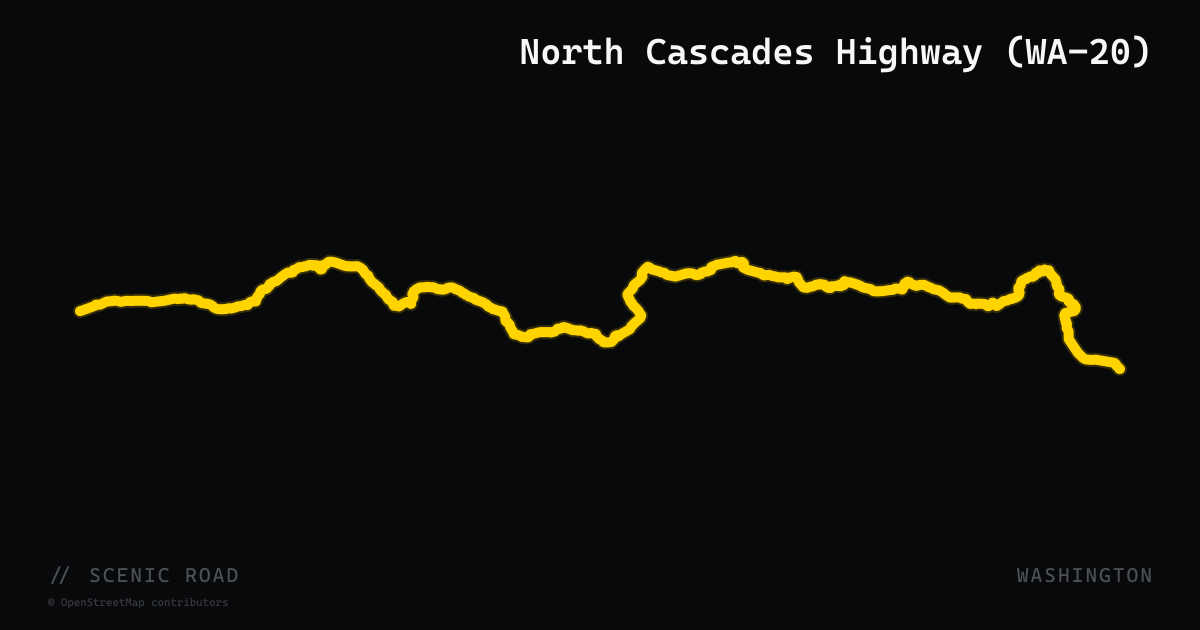
The high passes don't open until snowpack clears — often late May, sometimes later. SR-20 through the North Cascades closes each winter and has historically reopened in late April or May; in 2026, storm washouts and a rockslide kept the central section closed significantly longer than usual, with WSDOT targeting a full reopening by late June. Chinook Pass and Cayuse Pass on SR-410/SR-123 follow a similar pattern, typically closed from late fall through late spring. Check WSDOT's pass conditions page before any trip that crosses the Cascades — the calendar dates shift every year.
For the Olympic Peninsula loop, the road stays open year-round, but the west side's damp climate means slick pavement and moss-covered edges are a real factor in spring. The Washington Backcountry Discovery Route's gravel sections are best ridden July through September when the forest roads are dry and stable.
Matching Route to Bike
Not every road here works for every machine. The Mountain Loop Highway's central section is unpaved forest road — fine for dual-sport and ADV bikes, but genuinely rough for a loaded touring bike. The WABDR is an adventure route by design and shouldn't be attempted on street rubber. Highway 101 around the Olympic Peninsula and SR-20's paved stretches suit anything from a sport bike to a full dresser, though tight curves near the passes call for attentiveness, not momentum.
Hazards Worth Knowing
- Rockfall and washout debris on SR-20 and other canyon-wall roads, especially after wet winters
- Sand swept across pavement on mountain road corners after rain — common in early season
- Wildlife crossings — deer and elk move at dawn and dusk across most rural routes
- Wildfire smoke east of the Cascades in July–August can drop visibility quickly
- Gravel road surface changes on the Mountain Loop's FR-20 section — unexpected for riders not expecting it
Always run a current WSDOT alert check the day before riding any pass route. Conditions change fast in this state, and that's not a figure of speech.
Frequently asked
When does the North Cascades Highway (SR-20) open and close each year?+
SR-20 through the North Cascades is a seasonal road that typically closes in late November or December and reopens in late April or May, depending on snowpack and conditions. In 2026, major winter washout and rockslide damage kept the central section closed well into the season; WSDOT targeted a full reopening by June 25, 2026. Always check WSDOT's travel alerts and the SR-20 project page before planning a trip — the opening date shifts year to year.
Is lane splitting legal in Washington?+
No. Lane splitting — riding between lanes of traffic — is prohibited in Washington under RCW 46.61.608. Motorcycles are entitled to full use of a lane, but passing between stopped or moving vehicles is illegal and carries a minimum fine.
Does Washington require a helmet for all motorcycle riders?+
Yes. Washington has a universal helmet law: all riders and passengers must wear a DOT-approved helmet at all times, regardless of age or experience. The helmet must meet Federal Motor Vehicle Safety Standard 218 and be fastened securely while the motorcycle is in motion.
When does Chinook Pass (SR-410) close for winter?+
Chinook Pass typically closes in late October or November and reopens in late May, depending on snowpack at its 5,430-foot summit. Check WSDOT's mountain pass conditions before heading out, as the exact dates vary each year.
Is the Washington Backcountry Discovery Route (WABDR) suitable for street bikes?+
Not as a whole. The WABDR (updated to approximately 688 miles in November 2025) includes unpaved gravel and dirt sections designed for dual-sport or adventure bikes. A street-focused bike can handle some segments, but the full route is best suited to ADV-style motorcycles with off-road capability. The recommended riding window is July through September.
What hazards should I watch for on Washington's mountain roads?+
Common real-world hazards include sand and gravel washed across the pavement after rain events, rockfall on canyon-wall sections, deer and elk crossing at dawn and dusk, and wildfire smoke reducing visibility on eastern Washington roads in late summer. On the Olympic Peninsula's Highway 101, wet pavement and moss-covered road edges can reduce grip even in summer. The Mountain Loop Highway's central gravel section can be unexpectedly rough for non-ADV bikes.
When to ride
The best riding window across most of Washington runs from late spring through early fall — typically late May through September — when mountain passes have cleared snow and stable weather is most reliable on both sides of the Cascades. The Olympic Peninsula and other west-side routes can be ridden earlier in spring, though riders should expect wet pavement and reduced grip in shaded corners. East of the Cascades, summer heat builds quickly and riders should carry extra water on longer stretches.
+Sources & references (7)
- SR 20/North Cascades Highway Emergency Repairs — WSDOT
- North Cascades Highway 2026 Opening — WSDOT Blog
- RCW 46.37.530 — Washington State Motorcycle Helmet Law
- Washington State Motorcycle Laws — Russell & Hill
- Washington State Motorcycle Laws — Law Tigers
- Is Washington State a Good Place to Ride a Motorcycle? — Riders Share
- Cascade Loop Travel Alerts