
Best Motorcycle Roads in Tennessee
Tennessee earns its reputation on two wheels honestly. The eastern third of the state sits on the Appalachian fringe, where the Cherokee National Forest alone holds more curve-per-mile than most riders can cover in a week. Head west and the terrain flattens into rolling hardwood ridges, river bottoms, and the quiet corridor of the Natchez Trace Parkway. Between those two poles you'll find high-elevation skyways, dense forest loops, a ridge-top connector with zero commercial traffic, and one 11-mile stretch of US-129 that draws riders from every continent. Tennessee doesn't have one signature ride—it has a half-dozen genuinely distinct ones, each rewarding a different pace and a different kind of rider.
- Routes
- 2
- Best riding months
- May–June, Sept–Oct
- Helmet law
- Required (all riders; pilot exceptions apply for 21+)
- Lane splitting
- Illegal
- Signature terrain
- Appalachian forest, ridge-top skyways
The routes
Why Tennessee Belongs on Your Short List
No other state in the Eastern U.S. concentrates this many distinct road types in such a compact geography. East Tennessee's Appalachian edge delivers high-elevation ridge roads, tight forest switchbacks, and a world-famous 11-mile curve festival at Deals Gap. Central Tennessee transitions into the rolling hardwood country around the Natchez Trace. Far northeast, US-421 threads through Shady Valley across three mountains. The variety means a multi-day trip can move between genuinely different riding environments without backtracking.
Choosing the Right Route for Your Riding Style
Not every Tennessee road suits every rider. A few things worth knowing before you pick:
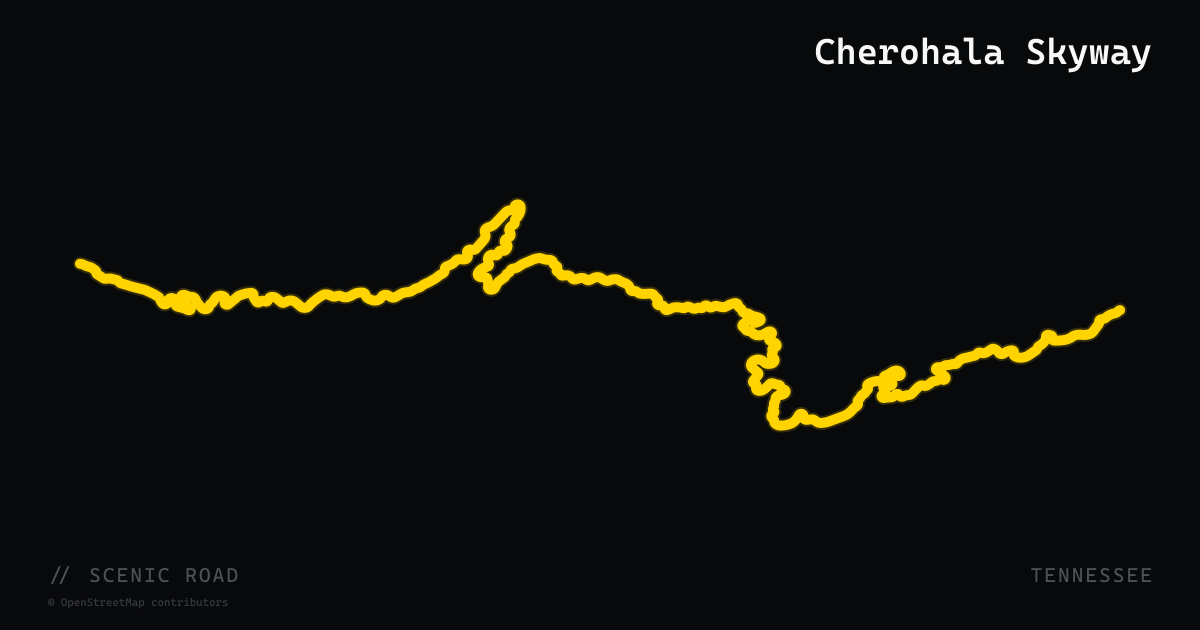
- Pace matters more than bike type. The Tail of the Dragon (US-129) enforces a 30 mph limit and sees consistent TN State Trooper presence—it rewards rhythm and patience, not aggression. Riders on touring bikes do it regularly. The same is true of the Cherohala Skyway's long sweepers, which are well-suited to heavier motorcycles.
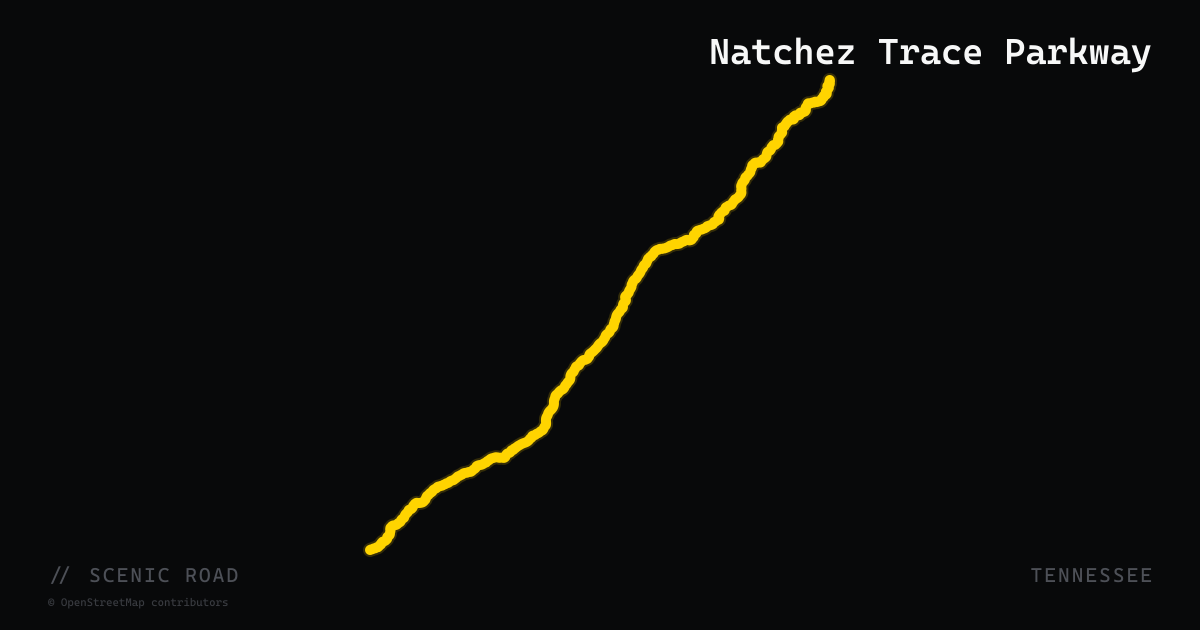
- The Natchez Trace is its own category. No commercial traffic, a 50 mph speed limit, and NPS-maintained pavement make it the lowest-stress road on this list—good for a long day in the saddle or for newer riders building confidence on two lanes.
- The Devil's Triangle and the Snake are less forgiving. Both routes include steep drop-offs, tight unsighted corners, and sections with minimal shoulder. Loose gravel sometimes collects on the inside of bends after rain.
- Tellico Plains is a useful hub. It's the western gateway to the Cherohala Skyway, the eastern terminus of the TransAmerica Trail, and within easy range of the Dragon and the Foothills Parkway.
Seasonal and Logistical Notes
Summer riding in East Tennessee is viable but requires planning: afternoon thunderstorms build quickly above 4,000 feet, and humidity in the valleys can be significant in July and August. Arrive early, ride the high roads before noon, and watch the sky. Fall foliage peaks on the Cherohala Skyway in mid-to-late October and draws heavy weekend traffic—weekday rides are noticeably calmer.
Winter is workable in the lower-elevation central and western parts of the state, but the Cherohala Skyway and other mountain roads above 3,000 feet can carry ice and see temporary closures without advance notice. Always check current conditions before committing to a route with no bailout options.
Hazards Worth Naming
Deer and black bears cross mountain roads at dawn and dusk—treat overlooks and blind downhill corners with corresponding care. On the Natchez Trace, the hazard profile is different: the NPS corridor is quiet enough that inattention becomes its own risk. Sand and gravel washed onto pavement after rain is a consistent issue on rural Cherokee National Forest roads. On the Tail of the Dragon, centerline drift by oncoming traffic—especially larger vehicles—is the most frequently cited close call among riders.
Frequently asked
Is a helmet required to ride a motorcycle in Tennessee?+
Tennessee law requires all motorcycle operators and passengers to wear a helmet meeting federal safety standards. A four-year pilot program (running through July 1, 2027) allows riders 21 and older who carry private health insurance (not TennCare) to ride without a helmet, but violations are treated as secondary offenses under the pilot. Riders under 21 must wear a helmet at all times. Eye protection is also required unless your motorcycle is equipped with a windshield. When in doubt, wear the helmet—it's the safest call regardless of the current law.
Is lane splitting legal in Tennessee?+
No. Lane splitting is explicitly illegal in Tennessee. Motorcycles must follow the same lane discipline as other vehicles, even in heavy traffic.
When is the best time to ride in Tennessee?+
For most of the state, spring (mid-May through June) and fall (late August through October) offer the most comfortable conditions—lower humidity, moderate temperatures, and strong scenery. July brings heavy rainfall in the mountains and high humidity statewide. High-elevation roads like the Cherohala Skyway are best April through October; winter can bring ice and temporary closures on the highest sections.
Does the Cherohala Skyway close in winter?+
There is no fixed seasonal closure, but winter conditions—snow, ice, and occasional temporary closures on the highest sections above 5,000 feet—make it unreliable from roughly December through early March. Always check current road conditions before riding it in cold weather. There are no services for nearly the entire 43-mile route, so a mid-ride closure leaves you with very few options.
What are the real hazards on Tennessee mountain roads?+
The main ones: deer and black bears crossing at dawn and dusk (common on the Cherohala Skyway and Foothills Parkway); afternoon thunderstorms that build quickly in the mountains, especially in summer; gravel or sand at the apex of blind corners on rural forest roads; steep drop-offs with no guardrail on the Devil's Triangle; and heavy weekend motorcycle traffic on the Tail of the Dragon, which also sees active TN State Trooper enforcement. On the Natchez Trace, wildlife crossings and drowsy slow-speed driving by touring vehicles are the main concerns.
Can I ride the TransAmerica Trail through Tennessee?+
Yes. Tennessee hosts the eastern terminus of the TransAmerica Trail (TAT) in Tellico Plains—the same town where the Cherohala Skyway begins. The Tennessee TAT section runs approximately 300 miles west to Counce on the Mississippi border. The Cherokee National Forest also has extensive gravel beyond the TAT route. Note that Tennessee is not on the Backcountry Discovery Route (BDR) network, so the TAT is the primary mapped off-pavement long-distance option here.
When to ride
Tennessee's humid subtropical climate means the state is rideable most of the year at lower elevations, but the mountain roads tell a different story. Late spring through fall is the prime window for the high-elevation routes: May and June bring cool air and light traffic, while October delivers the best fall foliage, particularly on the Cherohala Skyway where color change begins in late September at the higher elevations and runs through mid-November lower down. Winter can bring snow, ice, and temporary closures on the highest sections of mountain roads like the Cherohala Skyway, so riders should verify conditions before heading out during colder months.
+Sources & references (9)
- Tennessee Motorcycle Roads | REVER
- Devil's Triangle: A Tennessee Motorcycle Route | Dairyland Insurance
- Best Motorcycle Rides in Tennessee 2026 | GreatMotorcycleRoads.com
- Motorcycle Safety | Tennessee Traffic Safety Resource Service
- Tennessee Code § 55-9-302 (2024) – Crash helmet required | Justia
- Tennessee Motorcycle Laws 2024 Guide | CarInterior / Alibaba
- The Cherohala Skyway – North Carolina's $100 Million Mountain Road | Rider Magazine
- Cherohala Skyway | Visit Monroe TN
- Cherohala Skyway | Tail of the Dragon